


Maximizing Crop Yields with Plastic Mulch The Ultimate Farmer’s Guide
Modern agriculture is a delicate balancing act. Farmers and growers are constantly looking for innovative ways to outsmart unpredictable weather, manage resources efficiently, and protect their crops from pests and weeds. In recent decades, one innovation has stood out as a true game-changer in the agricultural industry:plastic mulch.
Whether you are managing a large-scale commercial farm or cultivating a specialized greenhouse, integrating plastic mulch into your farming practices can dramatically alter your harvest’s success. But what exactly makes this simple agricultural film so powerful? In this comprehensive guide, we will explore the science, benefits, and practical applications of plastic mulch, and how it can help you achieve unprecedented agricultural efficiency.
What is Plastic Mulch?
At its core, plastic mulch is a thin layer of polyethylene film that is laid out over the soil surface before or during planting. Seedlings are then planted through carefully precisely cut holes or slits in the film. While it may look like a simple sheet of plastic, this material is engineered to transform the microclimate directly around the plant’s root zone.
Available in various colors, thicknesses, and materials (including biodegradable options), plastic mulch is designed to address the specific environmental challenges of different crops and geographic regions. When implemented correctly, it acts as a protective shield, a moisture trap, and a thermal blanket all at once.
The Core Benefits Why Farmers Rely on Plastic Mulch

The widespread adoption of this technology globally is no accident. The use of plastic mulch directly correlates with healthier plants and higher profitability. Here is a closer look at the transformative benefits it brings to your fields:
1. Unmatched Weed Suppression
Weeds are the natural enemy of any crop, competing for essential nutrients, water, and sunlight. Traditional weed management requires intensive manual labor or heavy reliance on chemical herbicides, both of which eat into profit margins. Opaque plastic mulch, particularly the widely used black variety, acts as an impenetrable physical barrier. It entirely blocks the sunlight required for weed seeds to germinate and photosynthesize. By suffocating weeds before they even break the surface, farmers save countless hours of labor and significantly reduce herbicide expenses.
2. Superior Moisture Conservation
Water scarcity is a growing concern for agriculture worldwide. Bare soil is highly susceptible to evaporation, especially in arid climates or during the peak of summer. The impermeable nature of plastic mulch locks soil moisture in place, preventing it from evaporating into the air. This trapped condensation drips back down into the root zone. As a result, farms utilize significantly less water, irrigation systems can be run less frequently, and the crops develop deeper, healthier root systems resistant to drought stress.
3. Precise Temperature Regulation
Temperature fluctuations can stunt plant growth and delay harvest times. Plastic mulch acts as an exceptional temperature regulator. In early spring, when the soil is still too cold for optimal root development, black or clear mulch absorbs and traps the sun’s heat, warming the soil bed significantly faster than bare ground. This allows for earlier planting dates and accelerates seed germination. Conversely, in scorching summer climates, white or reflective mulch can be used to deflect sunlight, keeping the soil cool and preventing heat stress on delicate root systems.
4. Preservation of Soil Structure and Quality
Heavy rains and overhead irrigation can compact bare soil, creating a hard crust that prevents oxygen from reaching plant roots and limits root expansion. Furthermore, heavy downpours can wash away valuable topsoil and expensive fertilizers (a process known as nutrient leaching). Covering the soil beds with plastic mulch protects the earth from compaction and erosion. The soil remains loose, friable, and perfectly aerated. Additionally, because the plastic creates a barrier between the fruit (like strawberries or melons) and the damp soil, it drastically reduces the risk of soil-borne diseases and fruit rot, leading to a cleaner, more marketable harvest.
5. Exponentially Higher Yields
When you combine weed-free beds, consistent moisture, ideal root temperatures, and protected soil, the result is inevitable: stronger, more robust plants. Crops grown on plastic mulch reach maturity faster and produce significantly higher yields. The return on investment (ROI) for farmers is highly positive, as the increase in marketable, high-quality produce easily outweighs the initial cost of the agricultural film.
Choosing the Right Plastic Mulch Color for Your Crops
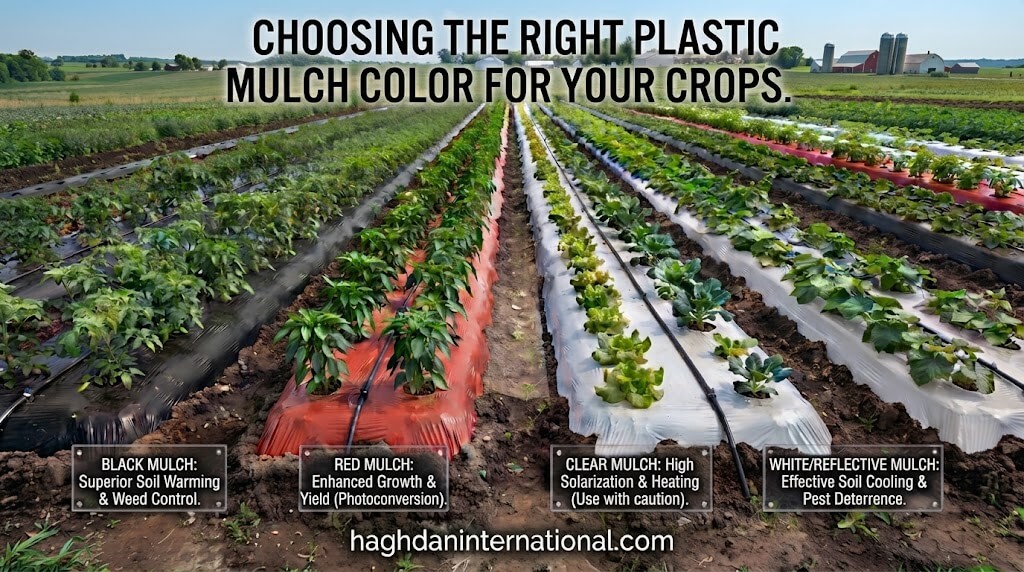
Not all plastic mulch is created equal. Selecting the right color is crucial for meeting your specific agricultural goals:
Black Plastic Mulch: The industry standard. Excellent for warming the soil and providing maximum weed control. Ideal for spring and early summer vegetables like tomatoes, peppers, and eggplants.
Clear Plastic Mulch: Used primarily in cooler climates to generate maximum heat (the greenhouse effect) or for a process called “soil solarization,” which bakes the soil to kill off pests, nematodes, and weed seeds before planting.
White or Silver/Reflective Mulch: Designed to reflect sunlight. This keeps the soil cooler for heat-sensitive crops like lettuce or broccoli during the summer. Reflective mulches also have the added benefit of disorienting certain flying insect pests, such as aphids and thrips.
Sustainable and Efficient Farm Management
In today’s competitive agricultural market, efficiency and sustainability must go hand in hand. By reducing the reliance on chemical weed killers and optimizing water usage, plastic mulch supports a more controlled and sustainable approach to commercial farming. The fertilizer you apply stays right where the plant needs it, and the water you pump goes directly to the roots. It is the ultimate tool for doing more with less.
A Smarter Way to Grow
At the end of the day, farming is about working smarter, not just harder. Adding plastic mulch to your fields is a simple step that pays off in a big way—saving you hours of back-breaking weed control, cutting down your water usage, and ultimately giving you a bigger, healthier harvest. It takes a bit of planning to lay it down, but once you see those early, vibrant crops thriving in the field, you’ll wonder how you ever managed without it. Here’s to a smoother growing season and your most successful harvest yet!
Similar articles for plastic mulch (plastic mulch)