


Transforming Oman’s Agricultural Heritage with Smart Water Management
The Sultanate of Oman boasts a deeply rooted agricultural heritage. From the sprawling date palm plantations in Nizwa to the lush, tropical fruit farms of Salalah, agriculture is an integral part of Omani culture and economy. However, as modern commercial farming expands, it faces a formidable challenge: severe water scarcity. In an arid climate characterized by minimal rainfall and high evaporation rates, traditional flood irrigation methods are no longer sustainable or financially viable.
To secure the future of farming in the region, adapting to smart water management technologies is non-negotiable. This is exactly why the design and implementation of drip irrigation systems in Oman has become the gold standard for both open-field agriculture and advanced greenhouse production. At Haghdan International, we understand that transitioning to precision irrigation is the most effective way to conserve precious water resources while simultaneously boosting crop yields and quality. Therefore, a professional approach to the design and implementation of drip irrigation systems in Oman is considered a critical step for agricultural sustainability and long-term success.
Why Oman Needs Advanced Drip Irrigation Systems
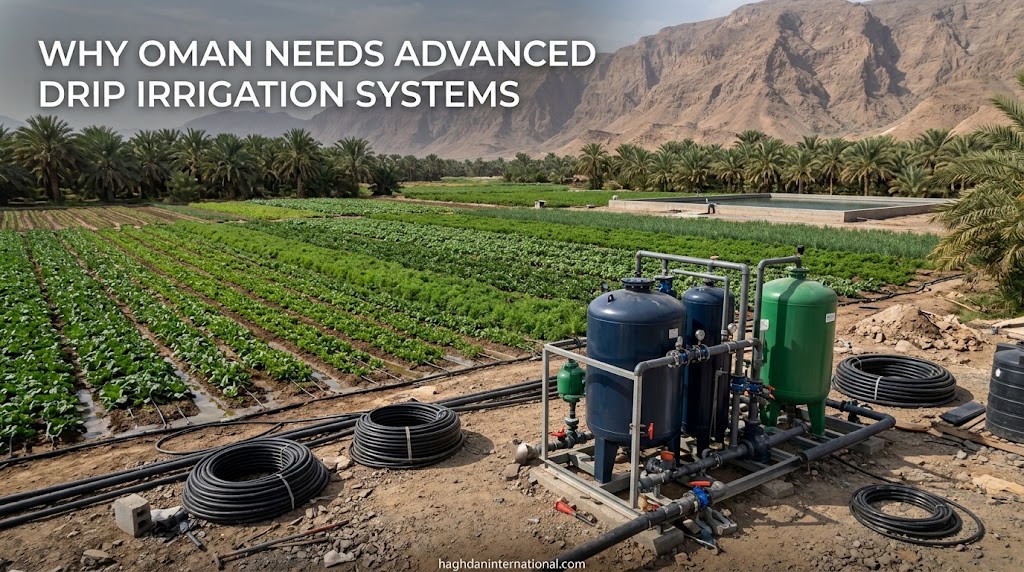
Oman’s agricultural sector heavily relies on groundwater and traditional Falaj systems. While historically effective, these sources are under immense pressure due to climate change, prolonged droughts, and increased agricultural demand. Furthermore, the country’s high summer temperatures mean that surface water evaporates quickly before it can properly reach the plant roots.
Drip irrigation solves this fundamental problem by delivering water directly to the root zone of the crops, drop by drop, through a carefully engineered network of valves, pipes, tubing, and emitters. By investing in the professional design and implementation of drip irrigation systems in Oman, farmers can achieve up to an 80% increase in water-use efficiency compared to traditional surface irrigation. Furthermore, focusing on the correct design and implementation of drip irrigation systems in Oman directly addresses the challenges of rapid evaporation and soil salinity, keeping the root zone consistently healthy.
Phase 1: The Design of a Drip Irrigation System
A successful agricultural project requires meticulous engineering and planning. The design and implementation of drip irrigation systems in Oman begins long before the first pipe is laid in the field. A one-size-fits-all approach does not work, which is why the design phase must be perfectly tailored to suit the specific needs of the farm.
1. Site Analysis and Topography Mapping
The very first step in the process is a thorough topographic survey of the land. The elevation and slope of the farm in regions like Al Batinah or Ad Dakhiliyah will dictate the required water pressure and the layout of the mainline and sub-main pipes. For undulating terrains, engineers must calculate precise pressure dynamics to ensure uniform water distribution across the entire field.
2. Soil Type and Water Quality Testing
Oman features varied soil profiles, ranging from sandy soils that drain rapidly to more compact textures. Sandy soils require specific emitter spacing and flow rates to maintain adequate moisture. Additionally, groundwater in some regions can be saline or contain high levels of suspended solids. A professional design and implementation of drip irrigation systems in Oman will always incorporate an advanced filtration station—utilizing sand separators, disc filters, or screen filters—to prevent the emitters from clogging and to prolong the entire network’s lifespan.
3. Crop-Specific Water Requirements
The water needs of a mature date palm differ vastly from those of greenhouse tomatoes or cucumbers. The system’s design must calculate the exact Evapotranspiration (ET) rates and peak water requirements of the specific crops being cultivated to ensure peak agricultural performance.
Phase 2: The Implementation Process
Once the engineering blueprint is finalized, the project moves to the crucial execution stage. The design and implementation of drip irrigation systems in Oman requires strict adherence to engineering standards and technical expertise to withstand the harsh Middle Eastern climate.
1. Selecting the Right Components
The durability of your irrigation network depends entirely on making the right technical choices. Due to the intense Omani sun, all exposed pipes, mains, and drip tapes must be highly UV-resistant. During the design and implementation of drip irrigation systems in Oman, selecting the right emitters based on soil data prevents pipe bursting, reduces maintenance costs, and ensures long-term reliability.
2. Pump Station and Filtration Setup
The heart of any modern irrigation system is the head control unit. During execution, the water source is connected to a high-efficiency pump, followed immediately by the filtration system. Proper installation of these units is critical to maintaining the necessary hydrostatic pressure throughout the entire farm network.
3. Integrating Fertigation Systems
One of the greatest advantages of this technology is the ability to practice fertigation—the application of liquid fertilizers directly through the water lines. By installing highly calibrated fertilizer tanks and venturi injectors, nutrients are delivered precisely to the root zone. Proper setup of these fertilizer tanks is a topic we strongly emphasize during the design and implementation of drip irrigation systems in Oman for achieving optimal output and minimizing chemical waste.
4. Field Installation and Trenching
The project execution continues with trenching and laying the mainline underground to protect them from mechanical damage. The lateral lines (drip tapes) are then laid out along the crop rows. During the design and implementation of drip irrigation systems in Oman, flushing the entire system to remove installation debris is a mandatory final step before operation.
5. Calibration and Automation
Modern agriculture thrives on smart automation. The final step involves configuring smart irrigation controllers, solenoid valves, and soil moisture sensors. These devices allow Omani farmers to monitor their irrigation schedules automatically, ensuring crops are watered exactly when needed.
The Transformative Benefits for Omani Farmers
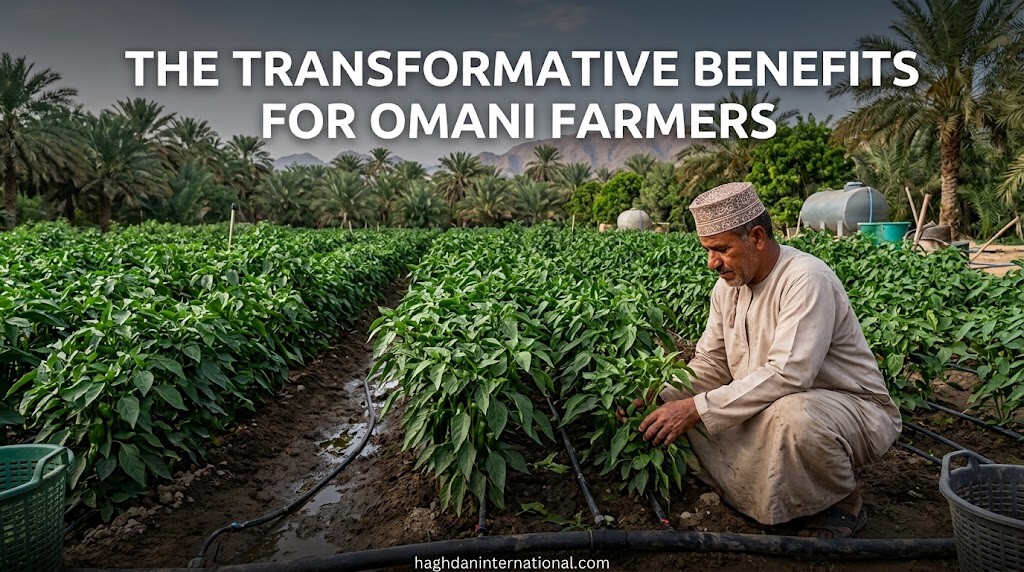
Investing in the expert design and implementation of drip irrigation systems in Oman offers profound advantages for any commercial farming enterprise:
Maximum Water Conservation: Reduces overall water usage by up to 70%, protecting vital groundwater reserves.
Increased Crop Yields: Consistent moisture and precise nutrient delivery lead to healthier plants, larger fruits, and maximum harvest profitability.
Weed and Disease Reduction: Because water is applied only directly to the crop’s root zone, the surrounding soil remains dry, significantly restricting weed growth and reducing soil-borne fungal diseases.
Cost Efficiency: Lower water consumption means lower pumping electricity costs, while targeted fertigation drastically reduces expensive fertilizer usage.
A Sustainable Future for Omani Agriculture
Navigating the complexities of modern agricultural infrastructure in an arid climate is no longer just an option; it is an absolute necessity for survival and growth. As water resources become more scarce across the Middle East, shifting towards smart, precision-based methods is the only definitive way forward for commercial farming.
Whether establishing a new high-tech greenhouse or upgrading a traditional open-field farm, success relies heavily on engineering precision. A flawless design and implementation of drip irrigation systems in Oman ensures that any agricultural investment remains highly efficient, sustainable, and built to last. By meticulously planning the layout, evaluating water quality, and calculating exact hydraulic requirements, farmers can guarantee their crops will thrive despite the harsh environmental conditions.
Ultimately, prioritizing the expert design and implementation of drip irrigation systems in Oman is the key to revolutionizing crop yields. It is a strategic move that not only protects vital natural resources but also secures a profitable, water-conscious future for the region’s entire agricultural sector.
Partner with Haghdan International
Navigating the complexities of modern agricultural infrastructure requires a trusted consulting and engineering partner. At Haghdan International, we specialize in providing comprehensive engineering solutions, precise planning, and professional execution tailored to the unique environmental conditions of the Middle East.
Whether you are establishing a new commercial greenhouse or upgrading an existing open-field farm, our expertise in the design and implementation of drip irrigation systems in Oman ensures your agricultural investment is highly efficient, sustainable, and built to last. We focus on meticulously planning the layout, calculating the exact hydraulic requirements, and overseeing the entire execution process to guarantee your crops thrive in an arid climate.
Ready to revolutionize your agricultural yields? Contact Haghdan International today to discuss your farm’s unique requirements, and let us lead the design and implementation of drip irrigation systems in Oman for your next successful project.