


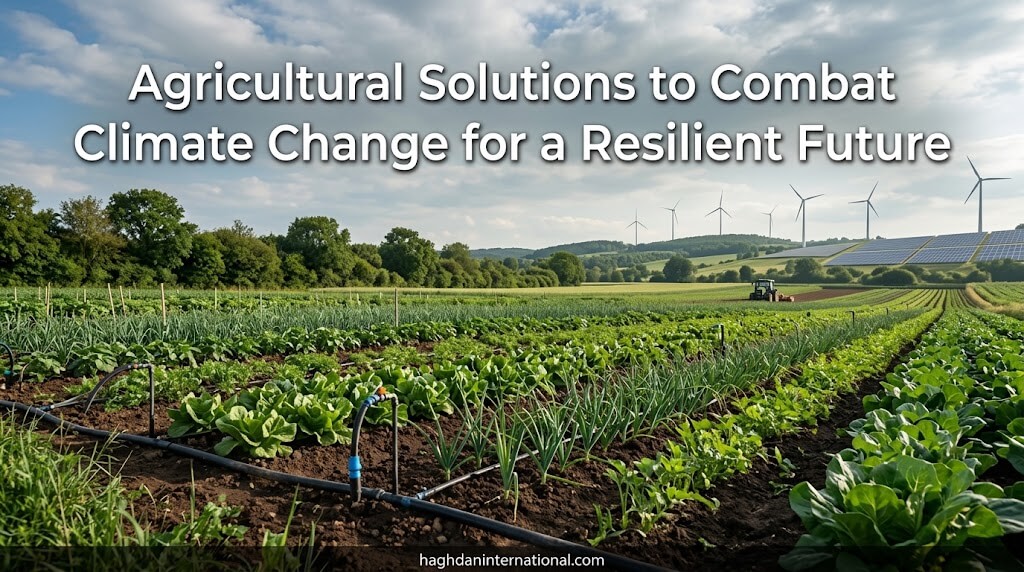
Agricultural Solutions to Combat Climate Change for a Resilient Future
Climate change is no longer a distant threat; it is a present reality reshaping our world. From unpredictable rainfall and prolonged droughts to extreme temperature fluctuations, every aspect of human life is feeling the impact. However, no industry is as uniquely vulnerable—and simultaneously as crucial to the solution—as agriculture.
Currently, traditional farming methods contribute significantly to global greenhouse gas emissions. Yet, with the right strategies, the agricultural sector can transform from a major climate contributor into one of our most powerful environmental saviors. By adopting effective agricultural solutions to combat climate change, we can secure global food systems, restore ecosystems, and dramatically reduce our carbon footprint.
When discussing agricultural solutions to combat climate change, it is crucial to look at both traditional wisdom and modern innovation. In this comprehensive guide, we will explore the most impactful climate-smart agricultural practices that are revolutionizing the way we grow our food and protect our planet.
The Intersection of Agriculture and Climate Change

To understand the necessary solutions, we must first recognize the relationship between farming and the environment. Agriculture is responsible for roughly a quarter of global greenhouse gas emissions, primarily through methane from livestock, nitrous oxide from synthetic fertilizers, and carbon dioxide from deforestation.
Conversely, farmers are the first to suffer the consequences of a warming planet. Shifting weather patterns ruin crop yields, degrade soil health, and deplete freshwater resources. The dual nature of this relationship means that implementing robust agricultural solutions to combat climate change is not just an environmental choice—it is an absolute economic necessity for the survival of the agricultural sector globally.
How Haghdan International Champions Sustainable Agriculture
At Haghdan International, we understand that the future of global commerce and food security relies heavily on sustainable practices. We actively support these agricultural solutions to combat climate change because we know that prioritizing environmental health does not mean compromising on product quality or business growth.
Whether you are looking to source sustainably grown produce or seeking insights into modern agricultural investments, our expertise bridges the gap between global demands and eco-friendly solutions. By partnering with forward-thinking agricultural producers, we ensure that the products entering the global market meet the highest standards of sustainability.
Top Agricultural Solutions to Combat Climate Change

Transitioning to a sustainable future requires a multi-faceted approach. Here are the most effective strategies and agricultural solutions to combat climate change that modern agriculture is using right now.
1. Regenerative Agriculture and Soil Carbon Sequestration
One of the most promising agricultural solutions to combat climate change is regenerative agriculture. Unlike traditional farming, which depletes the soil over time, regenerative farming focuses on restoring soil health and biodiversity.
Healthy soil acts as a massive carbon sink. Through processes known as carbon sequestration, plants pull carbon dioxide from the atmosphere during photosynthesis and store it in the soil’s root systems. Practices that promote this essential method include:
Cover Cropping: Planting secondary crops off-season to prevent soil erosion and keep microbes alive.
No-Till Farming: Avoiding the plowing of land, which releases trapped carbon back into the atmosphere and destroys the natural soil structure.
Crop Rotation: Alternating the types of crops grown on a piece of land to naturally replenish soil nutrients.
2. Precision Farming and Smart Technology
When evaluating modern agricultural solutions to combat climate change, precision farming stands out as a technological marvel. The integration of IoT (Internet of Things) sensors, satellite imagery, and AI-driven data analytics allows farmers to optimize their inputs while maximizing outputs.
By utilizing these tools, farmers can apply water, fertilizers, and pesticides only where and when they are strictly needed. This targeted approach drastically reduces chemical runoff into local waterways and lowers the greenhouse gas emissions associated with the over-application of synthetic fertilizers. Precision farming proves that ecological sustainability and economic profitability can easily go hand-in-hand.
3. Advanced Water Management and Micro-Irrigation
Efficient water management is a cornerstone among agricultural solutions to combat climate change, especially as global warming exacerbates water scarcity. Traditional flood irrigation wastes massive amounts of water through evaporation and surface runoff.
To combat this, modern agriculture is turning to micro-irrigation systems, such as drip and targeted sprinkler irrigation. These systems deliver water directly to the roots of the plants, reducing water waste by up to 50%. Furthermore, capturing rainwater and recycling agricultural wastewater are becoming standard practices, ensuring that crop yields remain stable even during severe drought seasons.
4. Agroforestry Blending Trees and Crops
As one of the most natural agricultural solutions to combat climate change, agroforestry seamlessly integrates trees and shrubs into crop and animal farming systems. This creates a harmonious environment with economic and social benefits. Trees provide natural shade, which reduces the evaporation of soil moisture and protects delicate crops from extreme heat.
Moreover, trees are phenomenal at capturing carbon. When integrated into farmlands, they create a microclimate that enhances biodiversity, provides habitats for natural pest predators, and offers additional revenue streams for farmers through fruit, nut, or timber harvesting.
5. Transitioning to Renewable Energy on Farms
Implementing holistic agricultural solutions to combat climate change requires looking at energy consumption. Farms require substantial energy to operate heavy machinery, pump water, and power storage facilities. Transitioning from fossil fuels to renewable energy sources is a vital step in reducing the agricultural carbon footprint.
Solar panels can be installed on barn roofs or over crops (agrivoltaics) to generate clean electricity while providing partial shade to sensitive plants. Similarly, utilizing biomass energy—converting agricultural waste into fuel—creates a closed-loop system that minimizes waste and reduces reliance on polluting external energy sources.
Conclusion
The climate crisis is a formidable challenge, but it is not an insurmountable one. By fully embracing these agricultural solutions to combat climate change—such as regenerative farming, precision technology, advanced water management, and renewable energy—we can transform our global food systems for the better.
Farmers, businesses, and consumers all have a vital role to play. Through conscious choices, technological innovation, and dedicated support from organizations like Haghdan International, agriculture can evolve to not only feed a growing global population but also actively heal the planet in the process.